
Florida Legal Blog

Does Financial Support From Your New Spouse or Fiancé Count as Income for Florida Child Support?
Florida’s child support statute includes payments that reduce living expenses. But appellate decisions exclude in-kind support from a new spouse or fiancé. The distinction can materially change a support calculation.

Florida Divorce, Bankruptcy & the Marital Home: Understanding the Application of the Automatic Stay
A bankruptcy filing does not stop every part of a Florida divorce, but it can sharply limit what the family court may do with a marital home that is property of the bankruptcy estate. This guide explains temporary exclusive possession, bankruptcy exemptions, relief from the automatic stay, domestic violence proceedings, and why converting a Chapter 11 case to Chapter 7 does not create a new automatic stay.

Can Florida Courts Impute Income to an Addict or Alcoholic for Child Support?
Addiction may explain why a parent lost a job, but it does not automatically answer whether Florida courts may impute income for child support. The court must distinguish voluntary unemployment from genuine incapacity and then determine what the parent can realistically earn at the time of trial.

How Florida Calculates the Marital Interest in a Premarital Home
A home purchased before marriage usually begins as nonmarital property, but mortgage principal paid with marital funds—and appreciation connected to those payments or marital efforts—may create a substantial marital interest. Florida’s statutory formula requires careful valuation, tracing, and presentation of the evidence.

Florida Alimony in 2026: Bridge-the-Gap vs. Durational Alimony
A 2026 Florida alimony decision exposes cherry-picked income, inflated need, the impact of domestic violence on alimony claims, and why historical earnings can prove future ability to pay Florida alimony. The opinion offers an unusually candid look at the stories spouses tell during alimony litigation. One spouse overstated how domestic violence affected her employability, while the other minimized his income and lifestyle despite a history of substantial earnings and a $5,000 concert-ticket purchase.
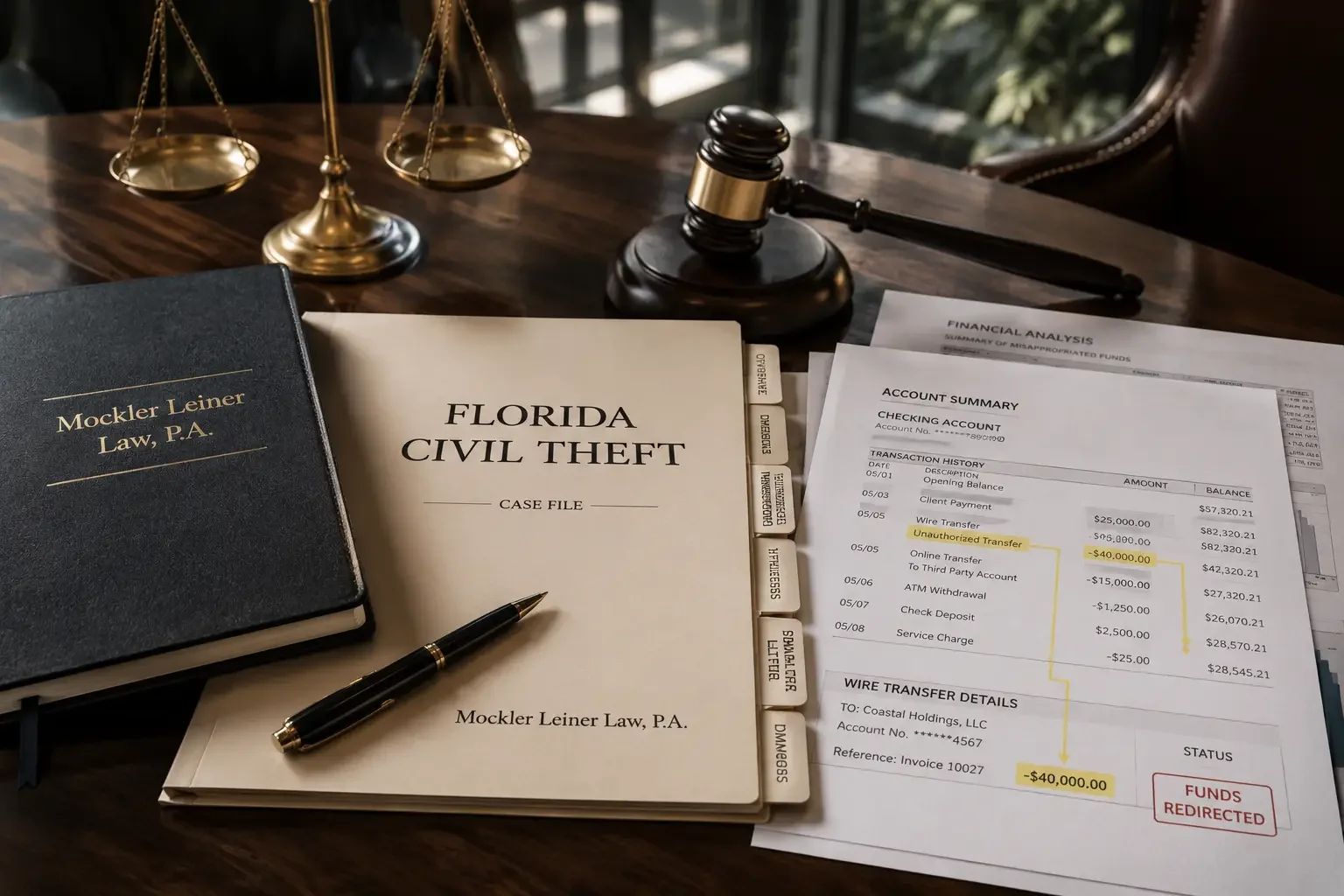
Florida Civil Theft Claims: How to Prove Civil Theft, Defend Against It, and Recover Damages
Florida civil theft is not just another way to describe an unpaid debt or broken contract. To prove civil theft, a plaintiff must establish statutory theft, criminal intent, and damages by clear and convincing evidence—and must satisfy Florida’s presuit demand requirement before filing suit.

Florida Invasion of Privacy Claims: What You Must Prove, Common Defenses, and Available Damages
Florida invasion of privacy claims are fact-specific. A plaintiff must identify the correct privacy theory, prove the invasion was legally actionable, preserve the evidence, and be prepared for defenses involving consent, public concern, public records, commercial use, and the First Amendment.

Florida Defamation Claims: What You Must Prove, Common Defenses, and Damages
False statements can destroy a person’s reputation, career, business relationships, and credibility. Florida defamation law provides remedies for libel and slander, but successful claims require proof of specific legal elements, careful evidence preservation, and a strategic response to common defenses.
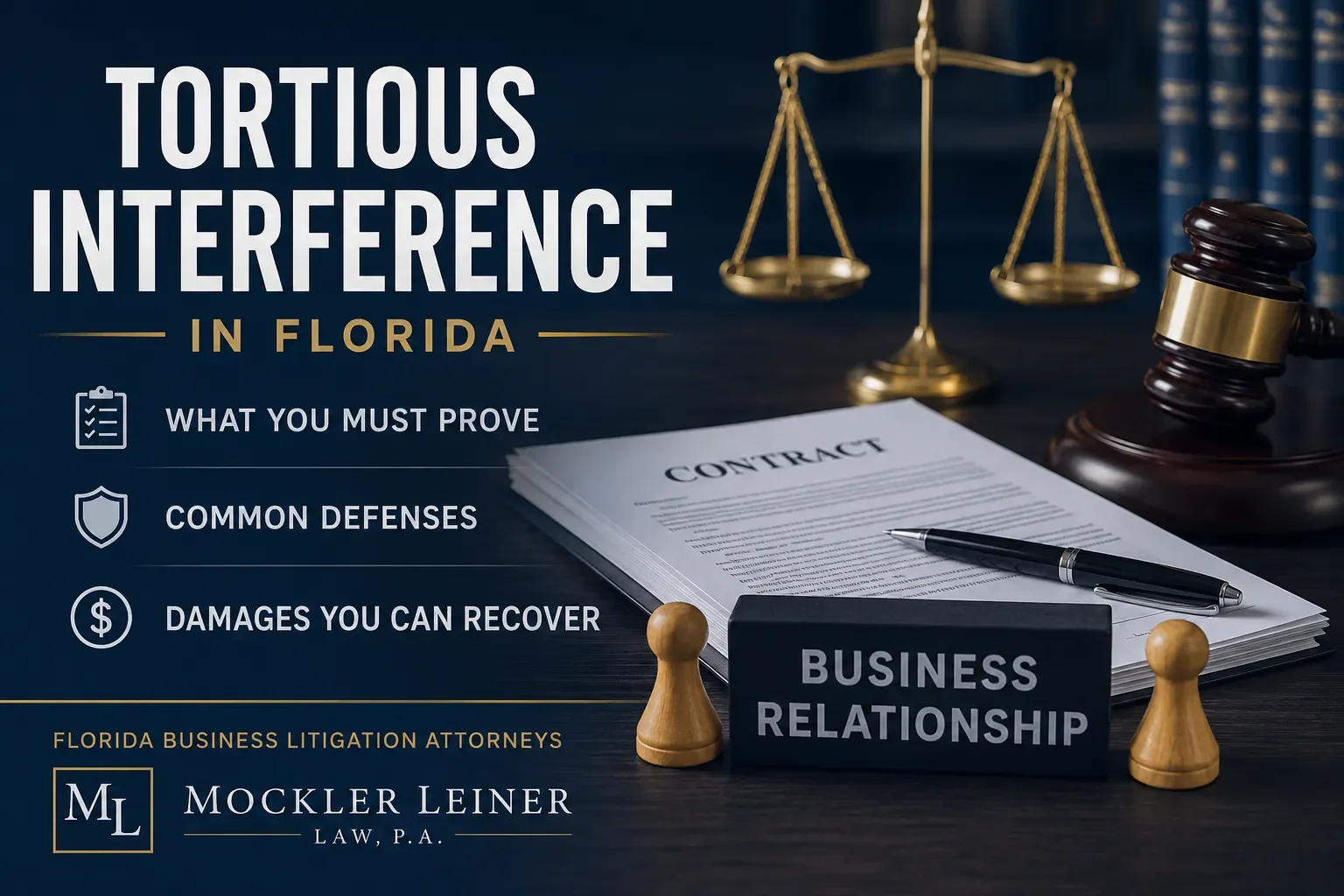
Tortious Interference in Florida: How to Prove the Claim, Defend Against It, and Measure Damages
Tortious interference is a powerful Florida business tort, but it is not a shortcut for every broken deal, lost customer, or competitive business loss. A successful claim usually requires proof of a real contract or identifiable business relationship, the defendant’s knowledge of that relationship, intentional and unjustified interference, causation, and measurable damages. This article explains how Florida courts analyze tortious interference claims, the difference between interference with a contract and interference with a business relationship, common defenses such as privilege, competition, lack of causation, and the “stranger” doctrine, and the types of damages that may be available in a Florida business litigation case.
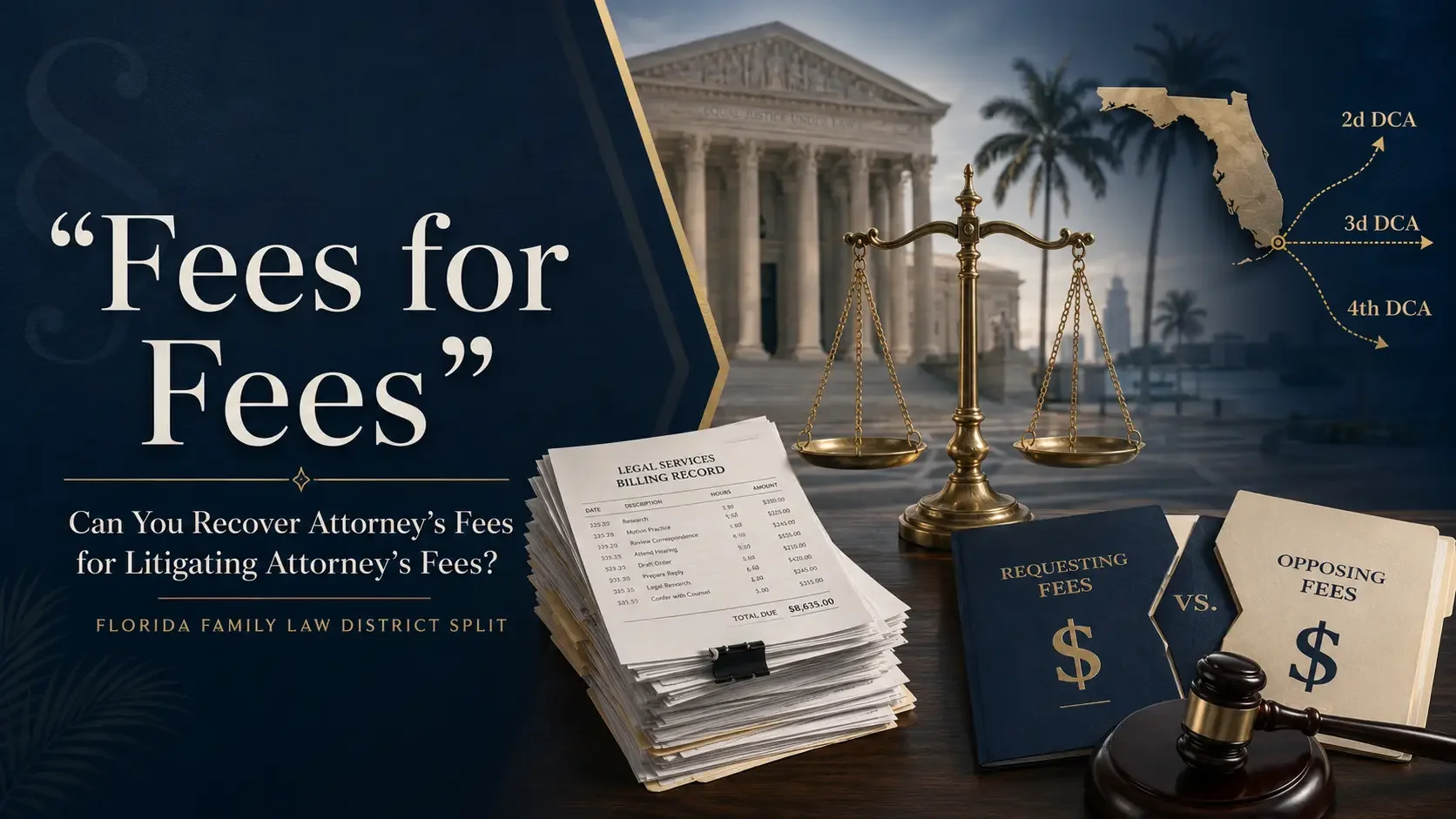
Can You Recover Attorney’s Fees for Litigating the Amount of Attorney’s Fees in a Florida Family Law Case?
Can a Florida family law party recover attorney’s fees incurred litigating the amount of attorney’s fees? The answer currently depends on the appellate district and the type of fee proceeding. Florida’s Second, Third, and Fourth District Courts of Appeal have reached different conclusions, and the Florida Supreme Court has accepted review in Schultheis v. Schultheis.

When Does a Florida Court Measure Need and Ability to Pay Attorney’s Fees in Florida Family Law Cases?
Florida courts must assess need and ability to pay attorney’s fees under sections 61.16 and 742.045 at the correct time in divorce and paternity cases, which is during the relevant proceedings and typically at the conclusion of the final hearing.
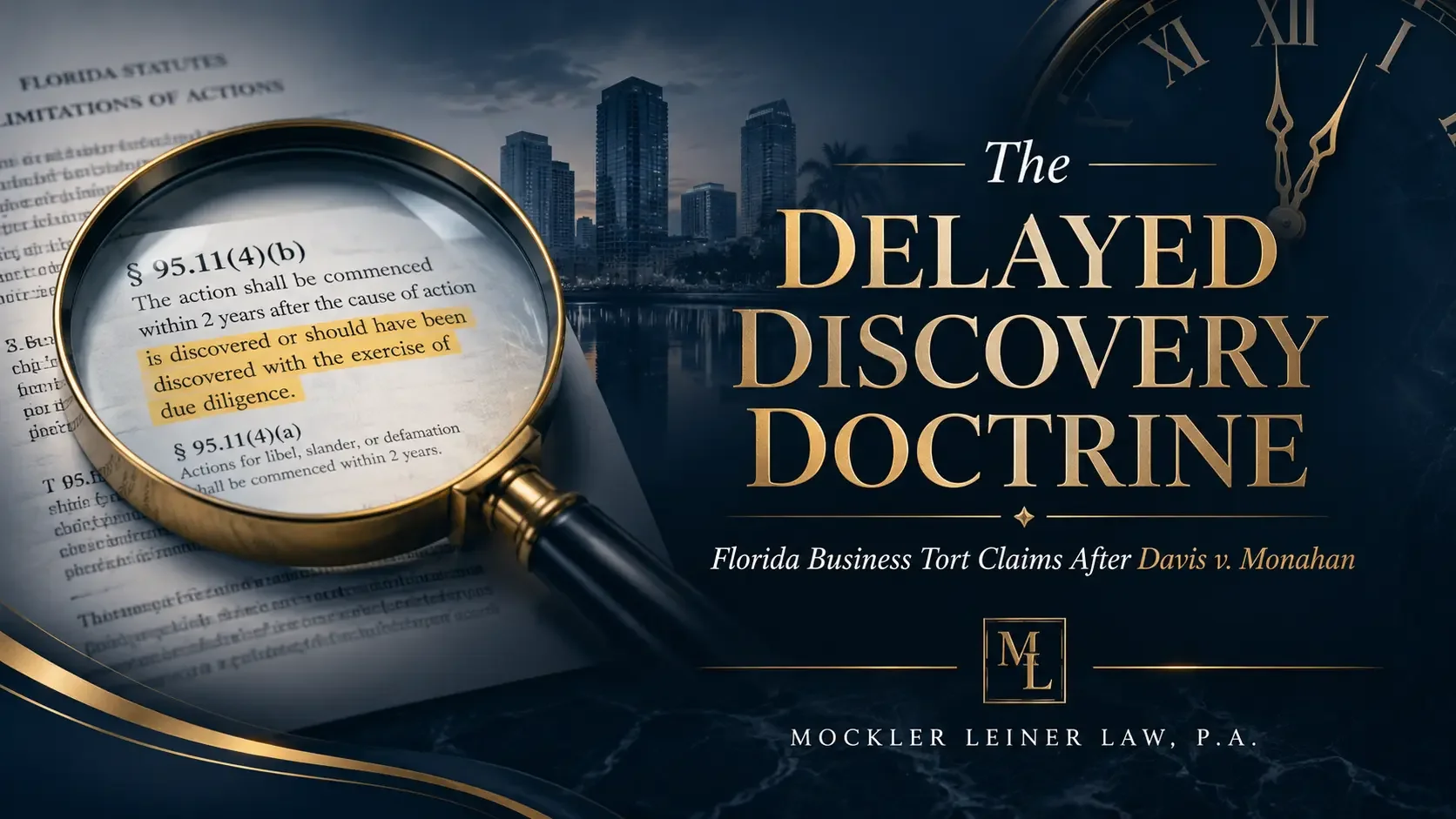
The Delayed Discovery Doctrine in Florida Business Tort Cases: What Davis v. Monahan Means for Fraud, Civil Theft, Conversion, FDUTPA, Trade Secrets, and Fiduciary Duty Claims
Florida law does not automatically pause the statute of limitations just because a business owner did not discover misconduct right away. In Davis v. Monahan, the Florida Supreme Court limited the delayed discovery doctrine and made clear that many business tort claims can expire before the injured party fully understands what happened.